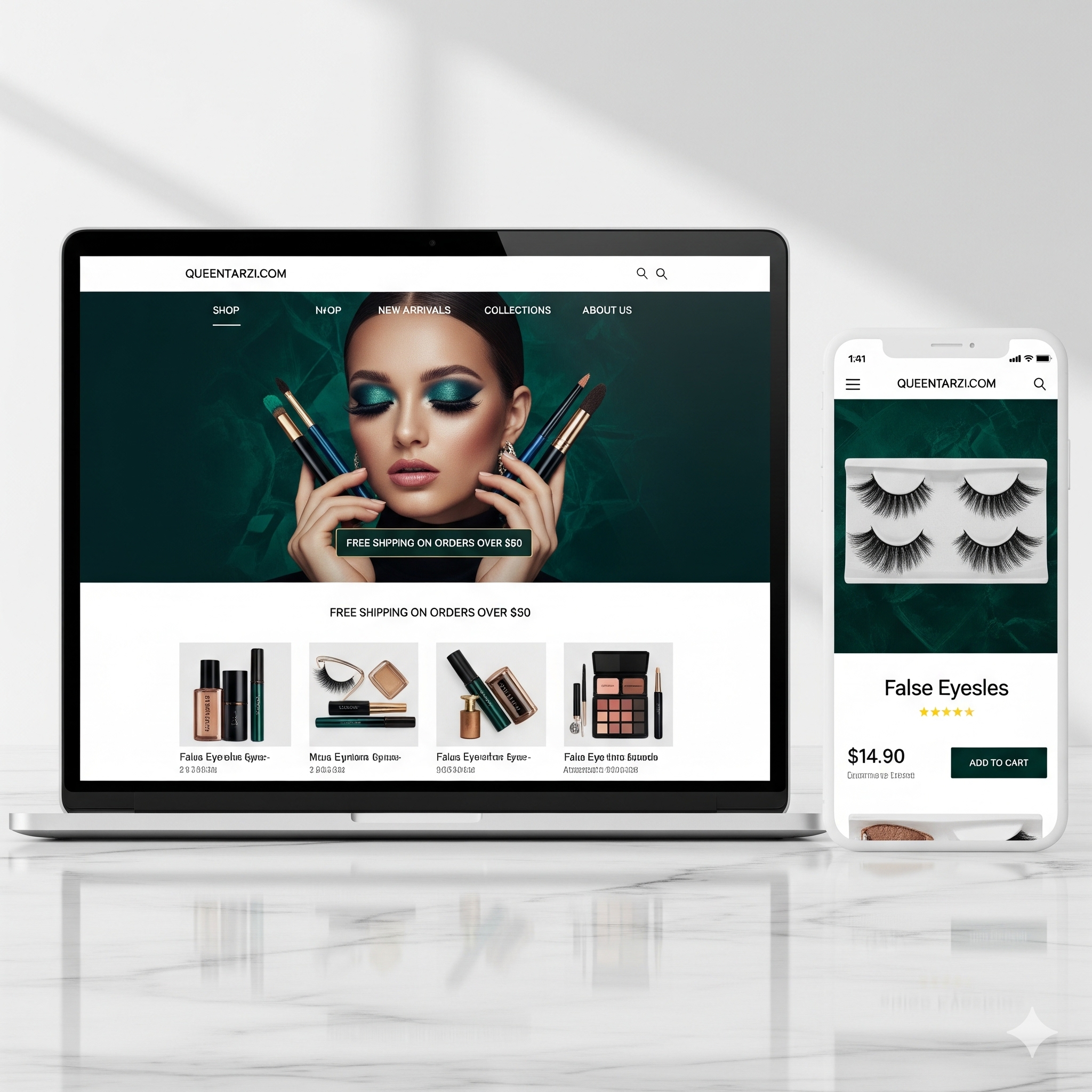
The dream of every eCommerce business owner is simple—more traffic, more customers, and more revenue. Yet thousands of Shopify store owners find themselves in a frustrating position. They invest heavily in marketing campaigns, social media promotions, paid advertisements, email marketing, influencer collaborations, and search engine optimization, only to discover that visitors arrive at their website but leave without making a purchase. This challenge is more common than most business owners realize. Generating traffic is only one part of the growth equation. The true success of an online business depends on its ability to convert visitors into paying customers. Without a conversion-focused strategy, even the most successful marketing campaigns can fail to deliver meaningful revenue growth. A high-converting Shopify store is not simply a store that looks attractive. It is a carefully engineered sales machine designed to guide visitors through a seamless buying journey. Every element, from page speed and navigation to product presentation and checkout optimization, contributes to the overall conversion experience.
At Zilancer, we have worked with brands across multiple industries, helping them transform underperforming Shopify stores into powerful revenue-generating platforms. Through strategic design, conversion rate optimization, performance improvements, and user experience enhancements, we help businesses maximize the value of every visitor who lands on their website. In this comprehensive guide, we will explore the essential components of a high-converting Shopify store and explain how businesses can dramatically increase sales by focusing on customer experience, trust building, performance optimization, and data-driven decision-making.
Understanding What Makes a Shopify Store Convert
Many Shopify store owners focus heavily on attracting traffic, believing that more visitors automatically lead to more sales. While traffic is important, it is only one part of the equation. The real success of an eCommerce business lies in its ability to convert those visitors into paying customers. A high-converting Shopify store is designed to guide users seamlessly from the moment they land on the website until they complete a purchase. Understanding what makes a Shopify store convert starts with understanding customer behavior. Every visitor arrives with a different intent. Some are researching products, some are comparing prices, and others are ready to buy immediately. A successful Shopify store anticipates these different customer journeys and provides the information, trust signals, and user experience necessary to move customers toward a purchase decision. Conversion is not about convincing people to buy something they do not need. Instead, it is about removing obstacles that prevent interested shoppers from becoming customers. Every unnecessary click, slow-loading page, confusing navigation menu, or missing piece of information creates friction. The more friction a customer encounters, the more likely they are to leave without making a purchase. One of the most important factors behind a high-converting Shopify store is a clear and professional design. First impressions matter significantly in eCommerce. Within seconds of arriving on a website, visitors form opinions about a brand's credibility and trustworthiness. A clean layout, consistent branding, high-quality visuals, and intuitive navigation immediately communicate professionalism and help visitors feel comfortable exploring the store.
User experience plays an equally critical role in conversion optimization. Customers should be able to find products quickly and easily. Categories should be organized logically, search functionality should work effectively, and product pages should provide all the information necessary to make confident purchasing decisions. When shoppers can effortlessly navigate a store, they are more likely to continue their journey and complete a purchase. Product pages serve as the heart of every Shopify store. These pages must do more than display a product. They should communicate value, answer customer questions, overcome objections, and create confidence. High-quality images, compelling product descriptions, clear pricing information, customer reviews, and detailed specifications all contribute to a stronger buying experience. Effective product pages help customers visualize ownership and understand exactly why a product is worth purchasing. Trust is another essential component of conversion success. Online shoppers cannot physically interact with products before buying, making trust one of the most valuable assets an eCommerce business can build. Secure payment badges, customer testimonials, transparent return policies, clear shipping information, and accessible contact details all help reassure visitors that they are dealing with a legitimate and reliable business. The more trust a store establishes, the easier it becomes for customers to make purchasing decisions. Website speed has become increasingly important in today's competitive digital landscape. Modern consumers expect websites to load almost instantly. Even a delay of a few seconds can lead to higher bounce rates and lost sales opportunities. Fast-loading Shopify stores create a smoother user experience, improve customer satisfaction, and significantly increase conversion rates. Performance optimization should therefore be viewed as a critical investment rather than a technical afterthought.
Mobile optimization is no longer optional. A large percentage of online shopping now occurs on smartphones and tablets. A Shopify store that performs perfectly on desktop but delivers a poor mobile experience risks losing a substantial portion of potential customers. Responsive design, mobile-friendly navigation, fast loading times, and streamlined checkout experiences are all essential for maximizing conversions across devices. The checkout process itself is often where conversions are won or lost. Many stores successfully attract visitors, generate product interest, and encourage add-to-cart actions, only to lose customers during checkout. A complicated or lengthy checkout process can create frustration and abandonment. High-converting Shopify stores simplify checkout by minimizing unnecessary form fields, offering multiple payment methods, displaying clear shipping costs, and reducing distractions that may interrupt the purchase process. Effective calls-to-action also contribute significantly to conversion performance. Customers need clear guidance regarding what action to take next. Whether encouraging users to add products to their cart, start a free trial, request a consultation, or complete a purchase, calls-to-action should be prominent, persuasive, and strategically positioned throughout the customer journey. Data-driven decision-making separates average Shopify stores from exceptional ones. Successful eCommerce brands continuously analyze user behavior, identify conversion bottlenecks, and implement improvements based on real customer data. Heatmaps, analytics platforms, conversion tracking, and A/B testing provide valuable insights that help businesses refine their stores over time. Conversion optimization is not a one-time project but an ongoing process of continuous improvement.
At Zilancer, we understand that a high-converting Shopify store requires much more than an attractive design. It requires a strategic combination of user experience optimization, conversion-focused development, performance enhancement, trust-building elements, and data-driven growth strategies. Our team works closely with businesses to create Shopify stores that not only look professional but also generate measurable results and sustainable revenue growth. Ultimately, what makes a Shopify store convert is its ability to provide the right experience for the right customer at the right time. When design, functionality, performance, trust, and customer psychology work together seamlessly, visitors are more likely to become loyal customers. Businesses that prioritize conversion optimization gain a significant competitive advantage, maximizing the value of every visitor and creating a stronger foundation for long-term eCommerce success.
Why Traffic Alone Does Not Guarantee Sales
One of the biggest misconceptions in eCommerce is the belief that more website traffic automatically leads to more sales. Many Shopify store owners invest significant amounts of money into Facebook Ads, Google Ads, SEO campaigns, influencer marketing, and social media promotions with the expectation that increasing visitor numbers will naturally result in higher revenue. While attracting traffic is undoubtedly important, traffic alone does not guarantee sales. The real challenge lies in converting visitors into customers. Think of website traffic as people walking into a physical store. A crowded store may appear successful, but if visitors browse products and leave without making a purchase, the business generates little revenue. The same principle applies to online stores. Thousands of visitors can arrive at a Shopify store every month, but without an optimized customer journey, strong trust signals, compelling offers, and a seamless shopping experience, those visitors may never become paying customers. The quality of traffic matters just as much as the quantity. Not all visitors arrive with the same level of purchase intent. Some users may be casually browsing, some may be researching products for future purchases, and others may have landed on the website accidentally. If a business focuses solely on generating large volumes of traffic without targeting the right audience, conversion rates often remain low regardless of visitor numbers. Targeted traffic is significantly more valuable than random traffic. Visitors who are actively searching for products, solutions, or services related to a business are more likely to convert than users who have little interest in the offering. This is why successful Shopify stores prioritize audience targeting, customer segmentation, and buyer intent alongside traffic acquisition strategies. Attracting the right visitors creates a stronger foundation for conversion success.
Another reason traffic alone does not guarantee sales is that many Shopify stores fail to deliver a compelling first impression. Visitors often decide within seconds whether they want to stay on a website or leave. If the store appears outdated, confusing, slow, or unprofessional, users may exit immediately regardless of how they arrived. Every visitor represents a potential customer, but that opportunity can be lost instantly if the website does not establish credibility and trust from the beginning. Website performance is another critical factor that influences conversion rates. Slow-loading pages create frustration and increase bounce rates. Modern online shoppers expect websites to load quickly and function smoothly across all devices. Even a slight delay can negatively impact user experience and reduce the likelihood of completing a purchase. Businesses that invest heavily in traffic generation while neglecting website performance often experience disappointing results because visitors abandon the site before exploring products. User experience also plays a major role in determining whether traffic converts into revenue. A visitor who cannot easily find products, navigate categories, understand product benefits, or complete a checkout process is unlikely to become a customer. High-converting Shopify stores are carefully designed to eliminate friction at every stage of the customer journey. Clear navigation, intuitive layouts, persuasive product pages, and streamlined checkout experiences all contribute to improved conversion rates. Product presentation is another factor that significantly impacts purchasing decisions. Visitors may be interested in a product, but poor descriptions, low-quality images, missing specifications, or insufficient information can create uncertainty. Customers need confidence before making a purchase. Detailed product pages that communicate value, answer questions, and address concerns help visitors move closer to conversion. Without this information, traffic may increase while sales remain stagnant. Trust is often the missing ingredient in many underperforming Shopify stores. Online shoppers are naturally cautious when purchasing from unfamiliar brands. If visitors cannot find customer reviews, secure payment indicators, shipping details, return policies, or contact information, they may hesitate to complete a transaction. Building trust throughout the customer journey is essential for converting traffic into sales. Successful Shopify stores consistently reinforce credibility through transparent communication and customer-focused design.
Another common mistake is focusing exclusively on attracting new visitors while ignoring existing opportunities. Many businesses spend significant budgets on acquiring traffic but fail to optimize their conversion rates. Even small improvements in conversion performance can produce substantial revenue growth without increasing advertising expenses. For example, increasing a conversion rate from one percent to three percent can potentially triple sales while maintaining the same traffic volume. This demonstrates why conversion optimization often delivers a higher return on investment than traffic generation alone. Marketing message alignment is equally important. Visitors arrive on a Shopify store with specific expectations based on the advertisement, search result, social media post, or email that brought them there. If the landing page fails to match those expectations, visitors may leave immediately. Consistency between marketing campaigns and website content helps create a seamless customer experience and improves conversion potential.
Mobile traffic continues to dominate eCommerce, making mobile optimization more important than ever. A store that performs well on desktop but provides a poor mobile experience risks losing a significant percentage of potential customers. Responsive design, fast loading times, mobile-friendly navigation, and simplified checkout processes are all essential for maximizing conversions from mobile users. Without proper optimization, traffic may increase while sales fail to follow. Data analysis often reveals why traffic is not converting into revenue. Successful eCommerce brands monitor user behavior through analytics tools, heatmaps, session recordings, and conversion tracking platforms. These insights help identify bottlenecks, abandoned pages, navigation issues, and checkout obstacles that prevent visitors from becoming customers. Understanding customer behavior allows businesses to make informed decisions that improve conversion performance over time.
At Zilancer, we frequently work with businesses that have already invested heavily in traffic acquisition but struggle to achieve meaningful sales growth. In many cases, the issue is not a lack of visitors but a lack of conversion-focused optimization. Our team analyzes the complete customer journey, identifies friction points, improves user experience, enhances store performance, and implements proven conversion strategies designed to maximize revenue from existing traffic. The most successful Shopify stores understand that traffic is only the beginning of the sales process. Generating visitors creates opportunities, but converting those visitors into customers requires strategic design, exceptional user experience, strong trust signals, optimized product pages, and continuous performance improvements. Businesses that focus on both traffic acquisition and conversion optimization are far more likely to achieve sustainable growth and long-term success. Ultimately, traffic without conversion is simply a missed opportunity. Every visitor represents potential revenue, but only businesses that prioritize customer experience and conversion optimization can fully unlock that potential. By focusing on the entire customer journey rather than traffic alone, Shopify store owners can transform more visitors into loyal customers and create a stronger, more profitable eCommerce business.
The Critical Role of Shopify Store Design
In the competitive world of eCommerce, first impressions can determine whether a visitor becomes a customer or leaves your website within seconds. Shopify store design is far more than just aesthetics. While a visually appealing website can attract attention, the true purpose of great design is to create a seamless user experience that guides visitors toward making a purchase. A well-designed Shopify store builds trust, improves navigation, enhances user engagement, and ultimately increases conversions. Many business owners underestimate the impact that design has on purchasing decisions. Customers form opinions about a brand almost instantly after landing on a website. Before reading product descriptions or comparing prices, they evaluate the overall appearance, professionalism, and usability of the store. If the design feels outdated, cluttered, or difficult to navigate, visitors may question the credibility of the business and leave before exploring further. On the other hand, a modern and professional design immediately creates confidence and encourages shoppers to stay longer. The relationship between design and trust cannot be overstated. In physical retail environments, customers can interact with products and speak directly with sales representatives. Online shoppers do not have this advantage. Instead, they rely heavily on visual cues to determine whether a business is trustworthy. Clean layouts, consistent branding, high-quality imagery, clear navigation, and polished user interfaces all contribute to a positive perception of the brand. Every design element communicates something about the business, influencing how customers feel throughout their shopping journey.
A successful Shopify store design begins with understanding customer behavior. Visitors should never have to work hard to find information, discover products, or complete a purchase. The best eCommerce designs prioritize simplicity and clarity. Every page should have a clear purpose, and every design decision should support the customer's journey. When users can quickly understand what a business offers and how to take the next step, conversion rates naturally improve. Navigation plays a fundamental role in store design effectiveness. Customers expect to find products quickly and efficiently. A confusing menu structure or poorly organized categories can create frustration and increase bounce rates. Effective navigation allows shoppers to move effortlessly through the website, helping them discover relevant products and information without unnecessary obstacles. A well-structured Shopify store creates a smooth path from product discovery to checkout completion. Visual hierarchy is another essential design principle that directly impacts conversion performance. Visitors do not consume every piece of information on a page equally. Instead, their attention is naturally drawn to certain elements first. Strategic use of headings, spacing, typography, imagery, and calls-to-action helps guide customers toward the most important information. Effective visual hierarchy ensures that key messages, product benefits, and purchase opportunities stand out clearly without overwhelming the user. Product pages are often where purchasing decisions are made, making their design particularly important. High-converting Shopify stores use product page layouts that focus on clarity, persuasion, and trust-building. Large, high-quality product images allow customers to visualize ownership, while detailed descriptions provide valuable information about features, benefits, and specifications. Customer reviews, testimonials, and social proof further reinforce confidence, helping visitors feel comfortable making a purchase decision.
The importance of mobile-first design continues to grow as mobile commerce becomes increasingly dominant. A significant percentage of online shoppers browse and purchase products using smartphones and tablets. A Shopify store that looks excellent on desktop but performs poorly on mobile devices risks losing a substantial portion of potential customers. Responsive design ensures that layouts adapt seamlessly across screen sizes, providing a consistent and enjoyable experience regardless of the device being used. Page speed and design are closely connected. Even the most visually impressive Shopify store can struggle if it loads slowly. Heavy graphics, poorly optimized images, and inefficient code can negatively affect performance, leading to increased bounce rates and lower conversions. Effective Shopify design balances aesthetics with performance, ensuring that visual elements enhance the user experience without compromising speed. Fast-loading pages create a smoother browsing experience and encourage visitors to continue exploring the store. Brand consistency is another critical aspect of successful Shopify store design. Consistent use of colors, typography, imagery, messaging, and visual elements strengthens brand recognition and creates a cohesive customer experience. When visitors encounter a unified brand presentation throughout the website, they are more likely to perceive the business as professional and reliable. Consistency builds familiarity, and familiarity often leads to trust. Design also plays a significant role in reducing customer anxiety during the purchasing process. Strategic placement of trust badges, secure payment icons, shipping information, return policies, and customer support options helps address common concerns that may prevent conversions. By proactively answering questions and eliminating uncertainty, a well-designed Shopify store creates a more comfortable shopping environment that encourages action. Modern Shopify design extends beyond visual appeal to include conversion-focused functionality. Features such as sticky add-to-cart buttons, quick-view product options, personalized recommendations, advanced search capabilities, and streamlined checkout experiences contribute to improved usability and higher conversion rates. Every element should be intentionally designed to help customers move closer to completing a purchase.
Data-driven design decisions are becoming increasingly important for eCommerce success. Rather than relying solely on assumptions or trends, successful Shopify brands analyze user behavior to identify opportunities for improvement. Heatmaps, user recordings, analytics data, and A/B testing reveal how visitors interact with the store, helping businesses optimize layouts, calls-to-action, product pages, and navigation structures. Continuous improvement based on real customer data often leads to significant conversion gains over time. At Zilancer, we believe that exceptional Shopify store design is the foundation of sustainable eCommerce growth. Our approach combines creative design expertise with conversion-focused strategies to create online stores that not only look stunning but also deliver measurable business results. We understand that every design decision should support customer engagement, improve usability, strengthen trust, and contribute to higher conversion rates. Our team works closely with brands to develop custom Shopify experiences tailored to their unique goals, target audience, and business objectives. From homepage design and product page optimization to mobile responsiveness and conversion rate enhancement, we focus on creating customer-centric experiences that maximize the value of every website visitor. We believe that effective design should do more than impress visitors—it should drive meaningful business growth.
Ultimately, Shopify store design is one of the most powerful factors influencing eCommerce success. A thoughtfully designed store can transform the way customers perceive a brand, interact with products, and complete purchases. Businesses that invest in professional, user-focused, and conversion-driven design gain a significant competitive advantage in today's crowded online marketplace. By combining aesthetics, usability, performance, and strategy, a high-quality Shopify design becomes a powerful tool for turning visitors into loyal customers and driving long-term revenue growth.